
Coloring pages for preschoolers offer much more than just a fun pastime. They play an essential role in early childhood development, touching on various aspects of learning and creativity. By engaging in these activities, children can enhance their fine motor skills while exploring their imagination. As we explore the multifaceted benefits of coloring, we’ll uncover how these simple pages can meaningfully impact a child’s growth in surprising ways. Let’s discover what makes them so valuable.

Key Takeaways
- Choose age-appropriate coloring pages to ensure they match preschoolers’ skill levels and enhance learning engagement.
- Select themed coloring pages that align with children’s interests to inspire creativity and personal connection.
- Incorporate open-ended designs that allow children to explore their imagination and express themselves freely through art.
- Include pages featuring letters, numbers, or shapes to promote foundational learning and cognitive development.
- Provide a diverse variety of coloring content to broaden children’s knowledge and appreciation for different subjects and experiences.
The Importance of Coloring in Early Childhood Development
Coloring plays an essential role in early childhood development, acting as a gateway to various skills we all value. It encourages our little ones to express themselves creatively, allowing them to explore their imagination without limits.
As kids choose colors and images to fill, they engage in a fun way to learn about the world around them. This simple activity fosters emotional growth, helping them develop self-esteem and an understanding of feelings.
When we sit down with them, we can encourage conversations about their choices, enhancing their verbal skills. Additionally, coloring provides opportunities for us to bond, creating shared moments that enrich their social skills.
Enhancing Fine Motor Skills Through Coloring Activities
While kids might see coloring as just a fun pastime, it greatly enhances their fine motor skills. By grasping crayons and controlling their movements, children develop essential hand-eye coordination and dexterity. We can encourage their growth through simple coloring activities.
Here are some benefits we can highlight:
- Improved grip strength: Holding crayons helps strengthen hand muscles.
- Enhanced coordination: Following lines improves hand-eye coordination.
- Fine motor precision: Detailed coloring nurtures control and accuracy.
- Boosted concentration: Focusing on coloring boosts attention spans.
- Increased confidence: Completing projects gives a sense of achievement.
Incorporating coloring into our daily routines not only makes learning enjoyable but also lays the groundwork for more complex skills they’ll need later on.
Stimulating Imagination and Creativity With Coloring Pages
As we plunge into the domain of coloring pages, we open doors to a vibrant sphere where imagination and creativity take flight. Every stroke of our crayons invites new ideas, turning a simple image into a personal masterpiece. By choosing colors, we express emotions, transforming the mundane into the extraordinary.
| Emotion | Color |
|---|---|
| Joy | Bright Yellow |
| Calm | Soft Blue |
| Excitement | Vibrant Red |
When we engage in this colorful activity, we encourage playful exploration. Each page becomes a canvas for storytelling, sparking our curiosity and inspiring us to dream big. Let’s embrace this journey, revealing the boundless potential within every child through their colorful creations!
Color Recognition and Cognitive Development
Understanding colors not only enriches our artistic endeavors but also plays an essential role in cognitive development.
When we encourage our little ones to recognize and name colors, we’re doing more than just having fun—we’re enhancing their understanding of the world.
Here are five key benefits of color recognition:
- Language Development: Naming colors builds vocabulary and communication skills.
- Visual Discrimination: Distinguishing between colors improves observation and attention to detail.
- Memory Skills: Remembering color patterns enhances memory capabilities.
- Classification Skills: Sorting objects by color fosters analytical thinking.
- Emotional Connections: Associating colors with feelings can deepen emotional intelligence.
The Role of Coloring in Emotional Expression
Colors not only help children develop cognitive skills but also serve as a powerful outlet for emotional expression. As we encourage our little ones to color, we provide them with a safe space to illustrate their feelings. This exploration fosters creativity and helps them articulate emotions they may struggle to verbalize.
Here’s a simple table to connect colors with emotions:
| Color | Emotion | Example Drawing |
|---|---|---|
| Red | Anger | Flames or a storm |
| Blue | Sadness | Rain or a teardrop |
| Yellow | Happiness | A sunny day or a smile |
| Green | Calm | Trees or a tranquil scene |
| Purple | Creativity | Fantasy creatures or stars |
Tips for Choosing the Right Coloring Pages for Preschoolers
When we’re selecting coloring pages for preschoolers, it’s important to take into account their interests and developmental stages.
Choosing the right pages can enhance their creativity and learning. Here are some tips to help us make better choices:
- Age-appropriate images: Opt for simple designs that match their skill level.
- Theme relevance: Pick pages that align with their current interests, like animals or vehicles.
- Encourage creativity: Choose open-ended designs that allow for personal interpretation.
- Promote learning: Select pages that incorporate letters, numbers, or basic shapes.
- Diversity in content: Offer a variety of themes and subjects to expand their knowledge and appreciation.
Incorporating Coloring Into Everyday Learning Activities
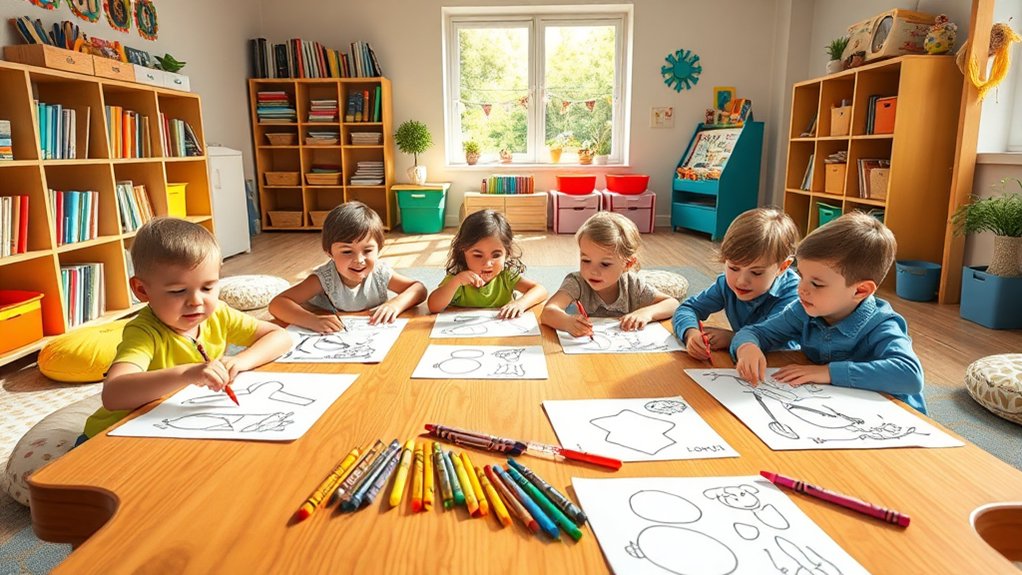
Coloring isn’t just a fun activity; it’s a valuable tool we can integrate into our daily learning routines. When we engage in coloring, we’re not only sparking creativity but also reinforcing concepts we’re teaching.
For instance, we can use coloring pages to illustrate letters, numbers, or shapes—making learning more interactive and enjoyable. During storytime, let’s encourage kids to color characters or scenes, helping to deepen their understanding of the narrative.
We might also incorporate coloring during lessons about seasons or nature by choosing related themes.
By connecting coloring with everyday learning, we make education vibrant and meaningful, allowing our children to express themselves while solidifying foundational skills.
Let’s embrace this approach and watch their enthusiasm flourish!
Frequently Asked Questions
What Age Should Children Start Using Coloring Pages?
We believe children can start using coloring pages as early as two years old. At this age, they’ll begin to explore colors and shapes, enhancing their coordination and creativity while having fun with us!
How Can Parents Encourage Coloring at Home?
Imagine a cozy corner filled with vibrant crayons and blank pages. We can encourage coloring at home by creating a dedicated space, offering various materials, and joining our kids in their colorful adventures. Let’s inspire their creativity together!
Are Digital Coloring Pages Effective for Learning?
Absolutely, we believe digital coloring pages can be effective for learning. They engage kids with interactive features, spark creativity, and offer convenience, making it easy for us to support their artistic exploration while nurturing essential skills.
What Materials Are Best for Preschool Coloring Activities?
Did you know that 85% of preschoolers thrive when using vibrant materials? For our coloring activities, we love using non-toxic crayons, washable markers, and thick paper. They enhance creativity and keep our little ones engaged!
How Often Should Preschoolers Color Each Week?
We believe preschoolers should color at least three to four times a week. Regular coloring keeps their creativity flowing, improves motor skills, and gives them a fun way to express themselves while exploring colors and shapes.
See our Preschool Coloring Pages Here
To summarize, we see that preschool coloring pages are powerful pencils of potential, fueling fundamental growth and fostering fantastic creativity in young minds. By embracing these vibrant tools, we can spark smiles, strengthen skills, and stir up self-expression. Let’s celebrate the colorful connection between coloring and learning, transforming simple sheets into spectacular stepping stones for our little learners’ journeys. Together, we’ll create a colorful canvas where imagination knows no bounds!


0 Comments